


Collective efficacy is a community’s shared belief and practical ability to act together on a common concern. It grows when trust, clear expectations, and real opportunities to participate come together. For residents, organizers, and local institutions, the key is to turn shared concern into safe, coordinated action without confusing unity with conformity.
Key takeaways
- Trust helps, but shared capacity also requires a clear goal and coordinated action.
- Small, credible wins can help communities learn that working together makes a difference.
- Emotional safety and fair participation matter as much as enthusiasm.
- Measure who can act, whose voice counts, and what changes, not just whether people feel connected.
Collective efficacy joins trust with the ability to act
In neighborhood research, collective efficacy describes social cohesion and trust alongside residents’ shared expectation that they can intervene for the common good. It is not simply a warm feeling of belonging. People need confidence that others will take part, a goal they can recognize as shared, and a workable way to coordinate.
A landmark 1997 Chicago study surveyed 8,782 residents across 343 neighborhoods. It found that neighborhood collective efficacy was negatively associated with violence, even after researchers accounted for individual characteristics, measurement error, and prior violence. That is an association, not proof that trust alone caused lower violence. The Chicago neighborhood study helps show why researchers examine community conditions rather than blaming individual residents for structural problems.
This distinction also separates community-level efficacy from individual self-efficacy. One resident may feel able to speak up, while still doubting that neighbors or institutions will respond. Shared power depends on the group’s expectations and capacity, not on a few confident individuals carrying the whole effort.
Feeling connected is not the same as being able to act together
Friendliness and trust can support cooperation, but they do not automatically create it. A group might enjoy strong social ties yet lack agreement about a shared problem, access to decision-makers, or confidence that others will follow through. Effective cooperation needs both relationships and task-specific expectations.
Researchers have also questioned whether general trust and cohesion should always be combined with beliefs about action in a single measure. The distinction matters: a community can feel close-knit but have little power to change a decision, or coordinate around one issue while disagreeing about others. Research on how the concept is measured highlights why the task and context should be stated clearly.
Emotions shape these expectations. Fear can discourage residents from speaking; anger can fuel participation but also harden conflict; repeated disappointment can make cooperation seem pointless. Building trust therefore means creating conditions for people to name concerns, disagree respectfully, and see that their contributions receive a fair response. That emotional groundwork is explored in the relationship between collective fear and social trust.
A practical example makes shared power visible
Imagine residents learn that their neighborhood’s only nearby park may close. Concern alone does not preserve it. Shared efficacy appears when people agree that keeping the park open is a common goal, identify who can influence the decision, and divide manageable tasks such as gathering resident experiences, attending a meeting, and requesting a written response.
The point is not that every resident must take the same role. One person may make calls, another may translate meeting materials, and someone else may ask a youth group what the park means to them. Clear roles make participation more accessible and reduce the burden on the same few volunteers.
After the first action, the group can review what worked, what felt unsafe or exclusionary, and what should happen next. A small result, such as securing a public meeting or getting a timeline from officials, is useful because it provides evidence that coordinated effort can lead somewhere. It is not a substitute for the larger outcome residents want.
Build shared power through clear goals and small commitments
Communities can build collective efficacy through repeated, specific experiences of working together. The process should make the goal understandable, distribute responsibility, and give people a way to learn from both success and setbacks.
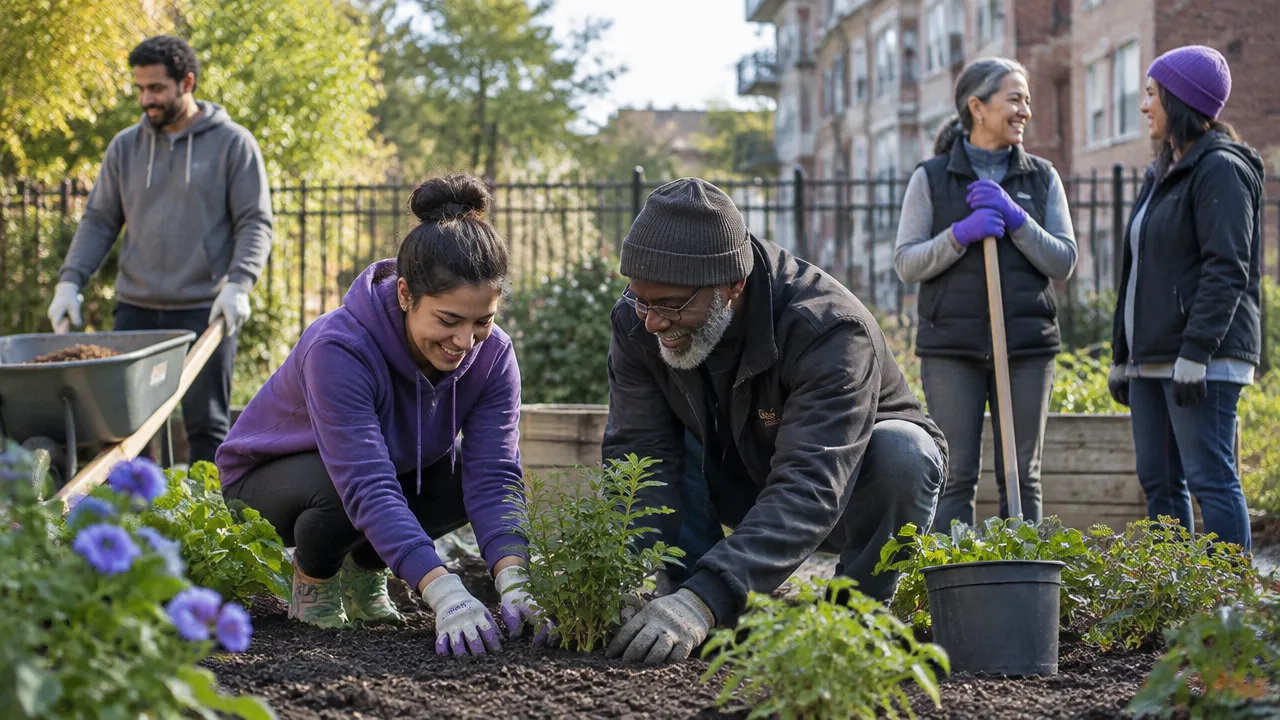
- Name one shared concern. Let affected people define the problem in concrete terms, rather than assuming everyone has the same priorities.
- Agree on a reachable first step. Choose an action that fits the group’s time, skills, and authority.
- Make participation safer and more accessible. Offer different roles, clear meeting norms, language access, and ways to contribute without public exposure.
- Share responsibility and information. Make decisions and follow-up visible so members do not have to rely on rumors or a single leader.
- Review results together. Acknowledge progress, discuss setbacks without blame, and decide what to adapt.
These practices work best when projects are emotionally literate as well as organized. Emotionally literate community projects make room for disagreement and repair, rather than treating every difference as disloyalty. Communities can also draw on trust-building practices for groups to make cooperation more dependable.
Shared power can fail when responsibility is unequal
Low participation does not necessarily mean residents do not care. Work schedules, caregiving, language barriers, past exclusion, fear of retaliation, and lack of transportation can all make involvement costly. If a project ignores those conditions, it may mistake unequal access for apathy and leave decisions in the hands of people who already have more time or influence.
Communities also need safeguards against using social pressure as a substitute for shared purpose. Informal intervention should be respectful and proportionate, not surveillance, intimidation, or punishment of people with less power. Institutions should not use volunteer effort to excuse their own responsibilities to provide services, safety, or fair access.
A Boston study using survey data from 1,710 residents across 38 neighborhood clusters found that high social fragmentation was associated with lower odds of reporting high collective efficacy, with an odds ratio of 0.71. Because the study is observational, it cannot establish cause and effect. Its findings are a reminder that community capacity is shaped by social conditions, not just individual willingness. The Boston neighborhood analysis also calls for more research into how these relationships work.
Measure progress in trust, participation, and outcomes
To see whether shared power is growing, track more than attendance or a general question about trust. Ask residents whether they expect others to help address a specific issue, whether they feel safe taking part, and whether the group can coordinate the next step. Repeat the questions after meaningful periods, using the same wording when possible.
Pair those perceptions with practical indicators: who participates, whose suggestions influence decisions, what actions the group completes, and whether the issue changes. A stronger community is not one where everyone agrees. It is one where people can work through differences, take part without undue risk, and act together on goals they have genuinely chosen.
Frequently asked questions
What does collective efficacy mean?
Collective efficacy is a group’s shared confidence and practical capacity to coordinate around a specific common goal. In neighborhoods, researchers often assess both trust and cohesion and the expectation that residents will act for the common good. It is more than friendliness: members must believe coordinated action is possible and have a safe way to act.
What is Bandura’s concept of collective efficacy?
Bandura’s concept describes a group’s shared belief that it can organize and carry out the actions needed to reach a goal. The focus is on what people can accomplish together, not simply on adding up each person’s confidence. A group’s belief also needs to match its actual resources, relationships, and ability to coordinate.
Which situation is an example of collective efficacy?
Neighbors learn that a local park may lose its funding. They agree that keeping it open serves the community, divide tasks such as contacting officials and gathering resident input, and follow through together. The example shows shared purpose, trust, and coordinated action, rather than a group merely agreeing that the park matters.
How can a community build collective efficacy?
Start with a specific shared concern, then invite affected residents to define what success would look like. Build trust through repeated, respectful contact, agree on small roles people can realistically take on, and review what happened afterward. Share credit, address barriers, and avoid making participation feel compulsory or unsafe.
How can collective efficacy be measured?
Track more than whether people say they trust one another. Ask residents about shared expectations and their confidence that neighbors would organize around a specific issue, then compare responses over time. Also record participation, completed actions, who had influence, and whether the intended community outcome changed. Treat survey results as perceptions, not proof of impact.