

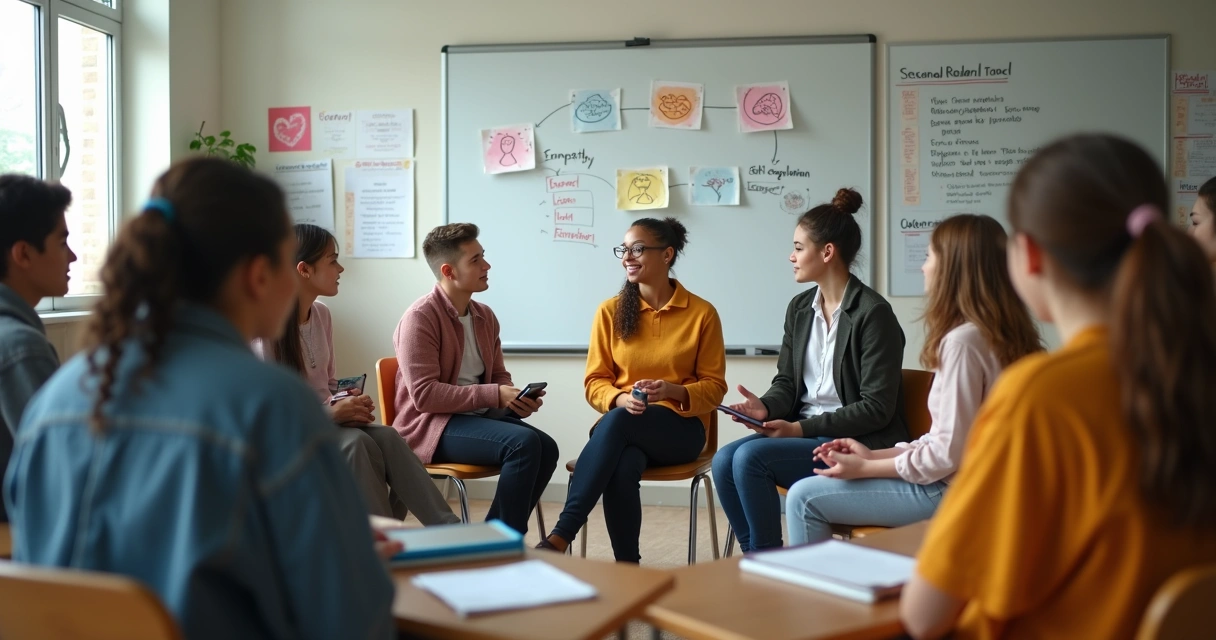
We often think of education as mainly about academic content, grades, and future careers. But there is a silent influence at work in every classroom, playground, and hallway: the nurturing of emotional maturity. As we have seen in our own research and practice, the way we guide youth emotionally matters as much as the curriculum. It shapes communities, social stability, and even the ethical backbone of future adults. Emotional maturity does not blossom in a vacuum—it is shaped by daily experiences within the educational system.
Understanding emotional maturity in young people
When we discuss emotional maturity, we do not mean the suppression of feelings or simply “acting grown up.” Instead, we refer to a balanced ability to recognize, understand, express, and regulate emotions in a way that promotes healthy relationships and social participation.
We have noticed that emotional maturity requires young people to:
- Recognize their feelings
- Understand and accept emotions in others
- Express themselves without causing harm
- Handle setbacks and frustrations constructively
Emotional skills matter for life, not just for school.
Building these skills is a gradual process, one that the educational environment either supports or challenges at every turn.
The unspoken curriculum: How schools teach emotions
So much learning occurs outside textbooks. We see emotional lessons embedded in group projects, sports, debates, and even in the everyday conflicts that arise among classmates. What is often called the “hidden curriculum” sends powerful messages about what feelings are welcome and how they should be handled.
For instance, a school that encourages open discussions about frustration or sadness creates safe spaces for youth. In our experience, educators who model self-control or apologize when mistakes are made, demonstrate emotional insight far beyond words. This modeling teaches children that emotional honesty and growth are valued by the community.
Sometimes, the rules and expectations in schools unintentionally suggest that “negative” emotions should be hidden. When only success is celebrated, or when discipline shames rather than teaches, students may learn to deny or bottle up feelings. This can foster anxiety, aggression, or even alienation—a pattern noticed in many school systems worldwide.
What elements in education nurture emotional maturity?
We have found that some practices in educational systems consistently create a climate where emotional development can flourish. These elements include:

- Emotional education programs: Curricula that explicitly teach children to name, understand, and manage emotions have long-term impacts. These programs often include lessons on empathy, conflict resolution, and ethical decision-making. Emotional education forms the basis for respectful and supportive interactions across school life.
- Consistent adult modeling: When teachers, coaches, and staff show emotional self-regulation and empathy, youth see how adults handle stress and disagreement. Their actions speak even louder than their instructions.
- Safe spaces for expression: Classrooms and school cultures that allow safe expression—in art, music, storytelling, or discussion—invite youth to process complex feelings. This creates trust and belonging.
- Social and ethical frameworks: Schools enforcing boundaries with fairness and teaching respect for difference support emotional growth. These values shape attitudes that extend well beyond graduation. Communities that value social ethics encourage emotional balance and thoughtful coexistence.
- Peer interactions and group work: Learning with others encourages young people to encounter different points of view and navigate emotional disagreements. This supports growth in patience, negotiation, and perspective-taking.
Obstacles to emotional maturity in education
Yet, schools are not always environments where emotional well-being is fostered. We see obstacles that hinder true maturity in students. Standardized testing, pressure to perform, overcrowded classrooms, and punitive discipline often crowd out emotional support.
In our perspective, the following challenges are common:
- A lack of training for staff to recognize and address emotional needs
- Overemphasis on academic achievements at the expense of personal growth
- Rigid rules that do not consider context or listen to students’ perspectives
- Limited time and resources for clubs, mentoring, and counseling
The greatest danger is when silent emotional pain goes unnoticed until it manifests outwardly—in bullying, social withdrawal, or high anxiety. Sometimes, as adults, we forget that every disciplinary problem is often an unspoken emotional crisis.
Building daily habits of self-regulation and empathy
We have seen that emotional maturity can only emerge with practice. Schools that support daily habits—like reflection, mindfulness, and even minor acts of kindness—make self-regulation an ordinary part of the environment.
Teachers can build routines for self-awareness, like starting the day with a few quiet breaths, using journals to note feelings, or holding brief check-ins on well-being. These practices promote self-regulation and awareness. When integrated consistently, they foster resilient youth ready to face setbacks without giving up.
Emotional awareness grows from small acts, done again and again.
The generational impact of emotional maturity
We believe that what happens in schools does not stay there. The emotional habits and beliefs that youth develop are carried into workplaces, families, and civic life. When a generation learns to connect, manage conflict, and show compassion, they build the kind of social fabric that resists polarization and violence. In this way, educational systems shape not only individual fate but collective patterns of cooperation, trust, and resilience.

Not every emotional challenge can be addressed through structured programs. Sometimes, inherited patterns—what some may call collective emotional heritages—shape what happens in a school community. By examining these patterns within systems thinking or through practices like systemic constellations, educators can break cycles of blame or shame, allowing collective healing.
We have also recognized that collective maturity is not automatic, even in supportive schools. It requires ongoing commitment, willingness to question assumptions, and time to reflect. The way schools nurture—or neglect—emotional maturity in young people can either narrow or widen the gap between generations.
Connection to collective behavior
There is a bridge from personal maturity to larger social health. We see evidence that youth who have practiced perspective-taking, conflict resolution, and self-reflection are less vulnerable to groupthink and emotional contagion. They are also more likely to become engaged citizens and ethical leaders.
Patterns established in school influence collective behavior. We view emotional education as a way to stabilize social structures from the inside out—less by policing behavior, and more by inspiring the kind of maturity that builds lasting cohesion.
Conclusion
We have seen that educational systems are not only transmitters of knowledge; they are also gardens where the seeds of emotional maturity are planted, watered, or sometimes neglected. When schools value emotional life as much as intellectual achievement, they prepare young people for futures marked by resilience, understanding, and ethical strength.
Through daily experiences, role models, and safe spaces to express and regulate feelings, education builds a foundation for individuals and the wider society. It shapes whether youth grow into adults capable of cooperation over control, empathy over aggression, and connection over isolation.
Frequently asked questions
What is emotional maturity in youth?
Emotional maturity in youth means being able to recognize, understand, and manage one's feelings in a balanced way, leading to healthy relationships and decision-making. It includes showing empathy, staying calm under stress, and learning from setbacks.
How do schools influence emotional maturity?
Schools shape emotional maturity through modeling, safe spaces for emotional expression, fair discipline, supportive routines, and peer interactions. The climate and attitudes shown by adults and peers teach children how to approach emotions, conflict, and wellbeing each day.
Which systems best support emotional growth?
Systems that support emotional growth are those with inclusive curricula teaching emotional literacy, teachers trained in empathy and self-awareness, safe spaces for expression, peer support programs, and practices that encourage self-reflection and mutual respect.
Can education improve kids' emotional skills?
Yes, education can improve children's emotional skills by teaching them how to identify, talk about, and manage their emotions through practice and reflection. This includes both formal lessons and informal modeling throughout daily school life.
Why is emotional maturity important at school?
Emotional maturity is important at school because it helps students handle stress, build friendships, resolve conflicts, and learn effectively. It supports a safe, supportive environment where all students can thrive both academically and socially.