
Teams do not grow only through plans, roles, and deadlines. We have seen again and again that they also grow through emotional balance, shared attention, and safer ways of relating. When a group learns how to pause together, listen together, and regulate itself together, the climate changes. Tension becomes easier to name. Reactions soften. Trust starts to feel real.
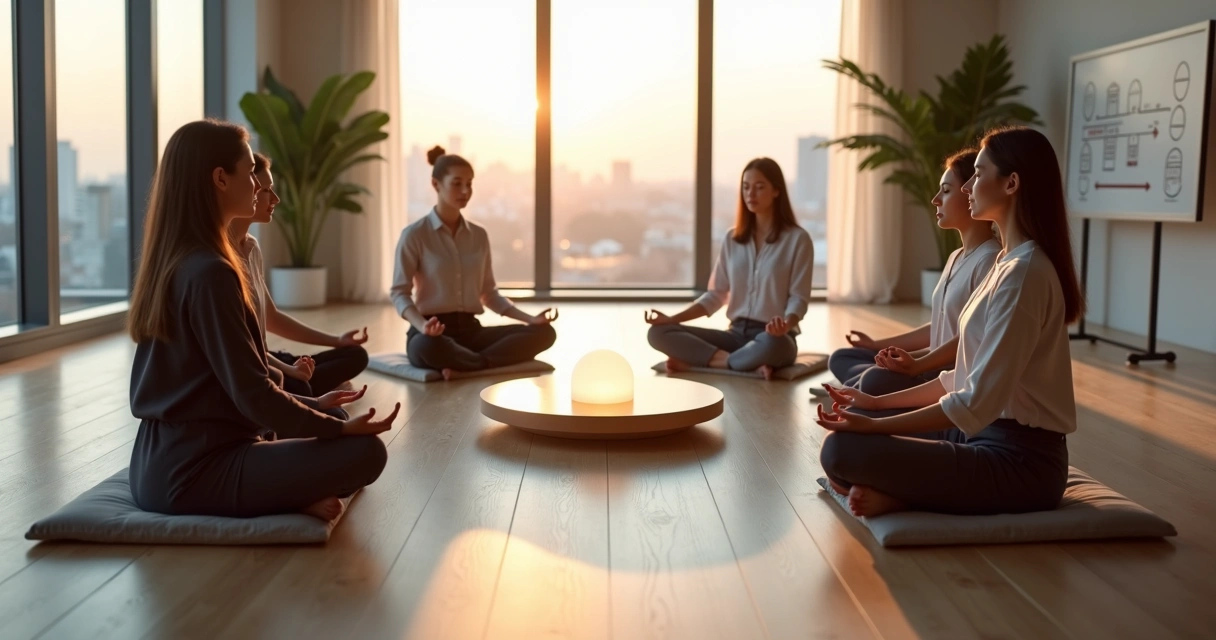
Marquesian meditation group practice is a guided team process that joins inner regulation with collective awareness.
In our experience, this kind of practice works best when it is simple, steady, and well held. It is not about forcing silence. It is about creating a structured moment where people can return to themselves without disconnecting from the group. That difference matters.
Why group meditation helps teams
Many teams carry unspoken pressure. One person is irritated. Another is withdrawn. A third is trying to keep everything under control. No one says much, yet the atmosphere gets heavy. We have all felt this in meetings that seem normal on the surface but tense underneath.
Group meditation helps because it gives the team a shared rhythm. Breathing slows. Attention returns to the present. People notice themselves before they spill stress into the room. This supports better listening, less impulsive speech, and more honest cooperation.
Research supports this direction. A meta-analysis of workplace meditation studies found lower stress and higher engagement and satisfaction after these programs. We also find it meaningful that group mindfulness training before peak stress reduced distress in a large trial, showing how shared practice can prepare people for demanding periods.
Calm is contagious.
When we treat emotion as part of team life, we stop seeing conflict as a random event. We begin to understand it as a signal. That is why themes such as collective behavior, social ethics, and emotional education belong in any serious conversation about team growth.
How to prepare the space
Before the first session, we need to prepare the setting. A rushed start weakens the whole experience. The room does not need to be perfect, but it should feel clean, quiet, and emotionally safe.
We suggest a space with chairs in a circle or semi-circle. Phones should be silent. Light should be soft if possible. The leader or facilitator should speak in a calm tone and explain the goal in plain words.
- A clear start and end time
- Comfortable seating with enough personal space
- A short opening statement about respect and confidentiality
- No pressure to speak during the meditation itself
A safe structure makes inner stillness easier for the group.
We also like to tell teams something simple at the start. No one needs to perform. No one needs to have a special spiritual skill. They only need to be present.

The steps of the practice
When we guide this method, we prefer a sequence that is easy to repeat. Repetition helps the team feel secure. Over time, the body begins to recognize the rhythm, and the group settles faster.
-
Begin with arrival. Invite everyone to sit comfortably, feel both feet on the floor, and notice the room. This lasts one to two minutes.
-
Shift into breath awareness. Ask the group to notice breathing without changing it at first. Then guide a slower rhythm, such as inhaling for four counts and exhaling for six.
-
Move to body observation. Guide attention through the jaw, shoulders, chest, stomach, and hands. Teams often notice how much tension they were carrying without knowing it.
-
Name the emotional field. Invite each person to quietly notice, not announce, what is present inside. Stress, fear, irritation, fatigue, hope. This step helps self-honesty.
-
Expand to group awareness. Ask participants to sense that they are breathing in a shared space with others. No analysis. Just perception of connection.
-
Close with one word or short phrase. If the group is ready, each person may share one word about how they are leaving the practice. This keeps the ending grounded.
This full sequence can take ten to twenty minutes. That is enough for most teams at the start. Later, the duration can increase if the group responds well.
What the facilitator should watch
The person guiding the session does not need to dominate the room. In fact, too much control can make people withdraw. We think the facilitator should hold the structure while staying human and steady.
There are a few signs to watch during and after practice:
- Whether people seem more settled in posture and tone
- Whether the group speaks with less interruption after the session
- Whether resistant members become less defensive over time
- Whether silence feels tense or calm
Sometimes the first session feels awkward. That is normal. We once saw a team sit in stiff silence for several minutes, with almost no one making eye contact at the end. By the third week, the same group was pausing before speaking in meetings and handling disagreement with more care. Change can begin quietly.
The best sign of progress is not perfect stillness, but healthier interaction after the practice.
For deeper support, it helps to connect meditation with themes of self-regulation and systemic constellation, since team tension often includes both personal patterns and shared emotional inheritance.

Common mistakes to avoid
Not every group practice works well. Some fail because the team is not ready. Others fail because the format creates pressure. We suggest avoiding a few habits that weaken trust.
- Starting without explaining the purpose
- Using long sessions too early
- Forcing people to share private feelings
- Treating the practice like a quick fix for deep conflict
If a team has strong unresolved tension, meditation alone will not solve it. It can support awareness, but difficult patterns may still need guided dialogue and emotional education. We should not ask silence to do the work of truth.
Silence reveals. It does not hide.
How practice becomes team growth
Real team growth appears in small shifts. Meetings become less reactive. Feedback lands with less shame. People recover faster after tense moments. The group starts to notice not only what is being said, but also how it is being said.
This is where meditation becomes more than a wellness ritual. It becomes a discipline of shared presence. Over time, a team that practices together may become more able to hold difference without turning it into hostility. We think that is one of the healthiest signs of maturity in any collective space.
Growth does not come from one strong session. It comes from rhythm. Short, repeated practice changes climate more than occasional intensity. That is the path we trust.
Conclusion
Marquesian meditation group practice offers a simple and grounded way for teams to grow from the inside out. It helps people notice their own emotional state, sense the group climate, and return to interaction with more balance. When the setting is safe, the steps are clear, and the rhythm is consistent, teams often become calmer, more honest, and more capable of working through tension without losing respect. We have seen that this kind of shared pause can change more than mood. It can change culture.
Frequently asked questions
What is Marquesian meditation group practice?
It is a guided group meditation process designed to build self-awareness and shared emotional awareness inside a team. It combines breath, body attention, inner observation, and group presence in a structured format.
How to start a meditation group session?
We start by preparing a quiet space, setting a clear time frame, and explaining the purpose in simple words. Then we invite the group to sit comfortably, notice the body, and begin with a short arrival moment before guiding the breath.
What are the main steps involved?
The main steps are arrival, breath awareness, body observation, silent recognition of the emotional state, shared group awareness, and a short closing reflection. The sequence is simple so the team can repeat it with ease.
Is it worth it for team growth?
Yes, when practiced with care and regularity, it can support calmer communication, better listening, and healthier responses to stress. The value appears in how the team relates after the session, not only during it.
How often should our team practice?
We usually suggest one to three times per week, depending on the team’s pace and openness. Even short sessions of ten to fifteen minutes can bring good results when the practice is consistent.